
1. Noticing Your Teeth Shifting?
- You finished your braces or aligner treatment
- Your smile looked perfect… until now.
- Lately, you’ve noticed:
- Small gaps reopening
- Teeth slightly twisting
- A change in your bite
- Small gaps reopening
Read More: Orthodontics Explained: From Braces to Clear
Can retainer shift teeth back after this minor relapse?
You’re not alone—many patients experience subtle shifts and wonder if their old retainer can correct them.
Let’s break it down and explore whether your retainer can help get your smile back on track.
2. How Do Retainers Actually Work?
Purpose:
- Hold teeth in their new position after orthodontic treatment
- Allow gums, bone, and soft tissue to stabilize around your corrected teeth
Read More: Fluoride Therapy: Expert Dental Care That Works for Kids
Retainers DO and DON’T
- Keep your smile aligned after treatment
- Prevent unwanted shifting
- Move teeth significantly like braces or aligners
- Fix major relapse cases
But do retainers move teeth back slightly?
- Yes — if the shift is minor and recent, a well-fitting retainer may guide the teeth back a bit
- Can retainers straighten teeth? Only in very mild cases
- Can retainers move teeth back? Sometimes — but results vary based on timing, fit, and severity
Read More: Protecting Tiny Teeth with Fluoride Treatment for Kids
3. Can Retainers Shift Teeth Back? What the Evidence Shows
Noticed your teeth shifting slightly after braces? You’re not alone. Many patients experience minor relapse over time, even after successful orthodontic treatment. This often sparks the question: can retainer shift teeth back into place naturally?
Let’s break it down with expert-backed insight:
What the Evidence Says:
Yes, retainers can help reverse slight dental movement — but only to a limited extent.
According to Scaffidi Orthodontics, if the movement is minimal and recent, wearing your original retainer consistently may gently guide teeth back into their previous position.
Invisalign also notes that early use of aligner-style retainers can correct minor shifts if caught soon after relapse.
Orthodontic Experts emphasize that retainers are meant to preserve alignment, not correct major dental changes.
If teeth have moved significantly, you may need new retainers or aligner treatment designed to apply strategic pressure.
👉 So, can retainers move teeth back? In mild cases, yes. But for anything beyond small shifts, professional help is necessary.
Read more: Pediatric Tooth Decay in Preschoolers: Causes and Care
4. Types of Retainers and Their Effectiveness
To better understand how retainers may influence tooth movement, it’s helpful to explore their types:
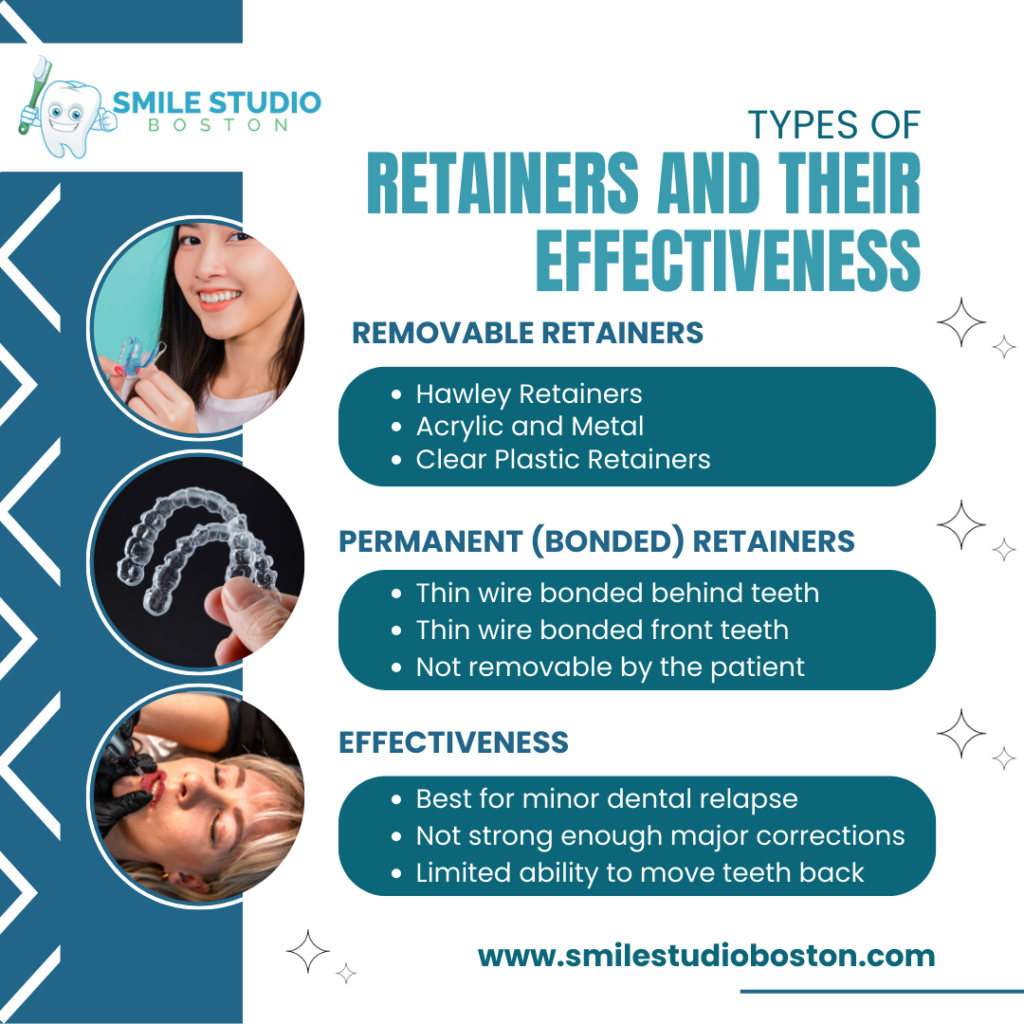
1. Removable Retainers
These include:
- Hawley Retainers: Made of acrylic and metal, with slight adjustability.
- Clear Plastic Retainers: Molded to the shape of your teeth (e.g., Invisalign Vivera retainers).
Effectiveness:
✔ Best for minor dental relapse
✔ Can sometimes shift teeth back if worn immediately after noticing movement
✘ Not strong enough for major corrections
Maintenance:
- Clear retainers usually last 6–12 months
- Hawley retainers can last several years with proper care
- Clean daily to prevent damage or odor
2. Permanent (Bonded) Retainers
- Thin wire bonded behind front teeth (usually lower arch)
- Not removable by the patient
Effectiveness:
✔ Provides constant support
✔ Great for preventing movement
✘ Limited ability to move teeth back
✘ Can break or collect plaque if not maintained
Maintenance:
- Requires excellent flossing techniques
- Lifespan can extend several years but must be checked regularly
If you’re wondering “do retainers straighten teeth?” — the short answer is: only a little, and only in the right conditions. If you notice a relapse, act fast. The sooner you wear your retainer, the more effective it may be at reversing small shifts.
5. Tips to Maximize Effectiveness
To ensure your retainer performs its job—and possibly helps with minor relapse—follow these tips:
1. Wear It Consistently
- Experts emphasize the importance of nightly wear, often for life.
- Compliance is key. Skipping even a few days may allow subtle shifts.
2. Know When to Replace It
- A poor-fitting retainer won’t just be uncomfortable—it can also fail to hold your teeth correctly.
- If your retainer feels tight, loose, or cracked, get a professional evaluation.
3. Clean Daily
According to Health.com, improper hygiene can lead to:
- Warping from bacteria buildup
- Bad odor or infections
- Loss of effectiveness
Pro Tip: Use lukewarm water and a gentle, non-abrasive cleanser—avoid boiling water or toothpaste, as these can degrade the material.
Read More: How to Brush 1 Year Old Teeth the Right Way at Home
Keep Your Smile Straight with SmileStudio!
So, can retainer shift teeth back?
✔️ Yes, but only for minor relapse. Retainers are designed to maintain your smile, not to realign it significantly.
If you’ve noticed your teeth shifting:
- Act fast—retainers work best within weeks of movement
- Don’t force an old retainer if it no longer fits
- Schedule a professional consultation for evaluation and new impressions
At Smile Studio, we help patients maintain straight, healthy smiles through personalized orthodontic care. Whether you need a new retainer or want to explore options for correcting a relapse, our team is here to help.
Don’t let another day go by without giving your smile the attention it deserves. Contact SmileStudio today to schedule your appointment. Whether you’re a new patient or returning, we’re excited to help you achieve the smile of your dreams.
📞 Call Us: +1 (617) 265-5606
📧 Email Us: smilestudioboston@gmail.com
🌐 Visit Our Website: https://smilestudioboston.com/
📍 Find Us: 1428 Dorchester Ave, Dorchester, MA 02122, United States
SmileStudio – Where Beautiful Smiles Begin. Join us on your journey to a healthier, more radiant smile. Book your appointment now!
Read More: How to Spot and Prevent Cavities in Children Early
FAQs
Q. Can retainers straighten teeth without braces?
Retainers can straighten teeth in only very minor cases. They are mainly designed to maintain alignment after braces, not to create significant tooth movement.
Q. Do retainers move teeth back after they shift?
Yes, retainers can move teeth back slightly if the relapse is minimal. However, for larger shifts, you may need orthodontic treatment such as braces or clear aligners.
Q. Can retainers move teeth back into perfect alignment?
In most cases, no. Retainers work best for small adjustments and holding your teeth in place, but major corrections require active orthodontic devices.
Q. Do retainers straighten teeth after years without wearing them?
If you haven’t worn your retainer for years, your teeth may have shifted too much for it to work effectively. A dentist or orthodontist can assess whether a new or adjusted retainer could help.
